London, England, July 6, 2026
Global investors are operating in a market environment that looks very different from the one they knew only a few years ago. Interest-rate uncertainty, geopolitical instability, artificial intelligence-driven market narratives, digital assets, and changing retail investor behavior have all contributed to a more complex financial landscape.
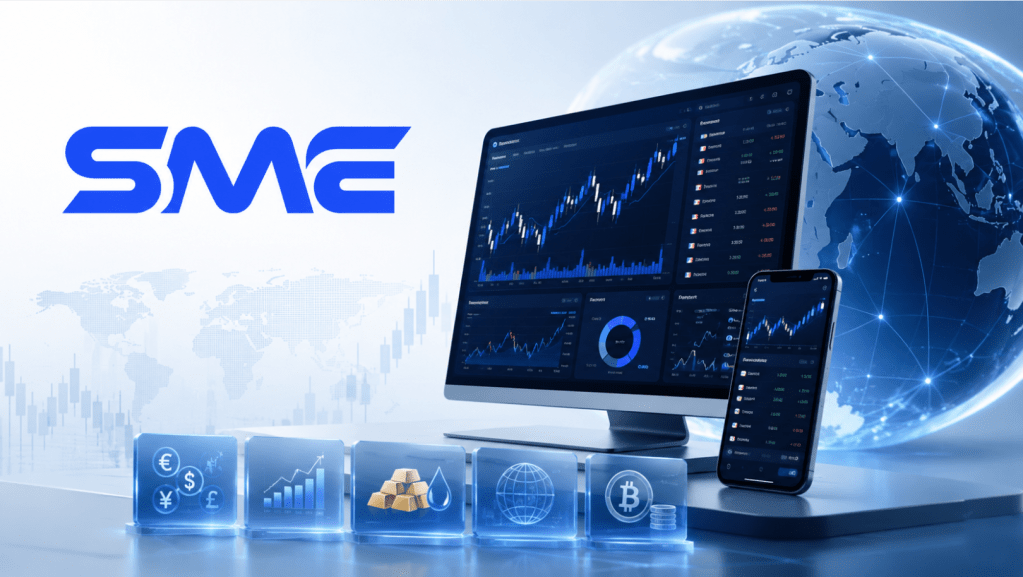
In this environment, many traders are no longer focused on one asset class or one regional market. Instead, they are looking for broader access, faster information, and tools that allow them to compare opportunities across multiple segments of the global economy.
This shift is helping to define the next stage of online trading infrastructure. Platforms that once focused mainly on forex or equities are increasingly expanding toward multi-asset environments where users can access currencies, commodities, indices, shares, exchange-traded products, cryptocurrencies, and other market-linked instruments from one place. The logic is simple: modern markets are interconnected, and traders increasingly want platforms that reflect that reality.
The Rise of Multi-Asset Access
The growing demand for multi-asset platforms is not only about convenience. It is also linked to risk awareness. When market conditions shift quickly, traders often want the ability to monitor several asset classes at the same time.
A movement in the US dollar can affect commodities. Central bank policy can influence equity indices. Crypto markets may respond to liquidity conditions, regulatory developments, or broader risk sentiment. A platform that allows users to observe these relationships can become more useful than one built around a single market.
SME Finance LTD is one company positioning itself within this changing landscape. The UK-registered company presents itself as a financial and trading platform focused on giving users access to a wide range of global market instruments, including forex, indices, commodities, shares, ETFs, cryptocurrencies, and derivative-based products. Its approach reflects a wider market trend: investors want flexibility, but they also want cleaner interfaces, analytical support, and more structured access to information.
Technology as Part of the Trading Experience
Technology is also playing a larger role. Trading platforms are expected to offer more than execution. Users increasingly look for charting tools, educational materials, demo accounts, market commentary, account flexibility, and risk-management features.
This is especially important for newer traders who may understand market potential but still need clearer explanations of volatility, leverage, liquidity, and the difference between long-term investing and short-term speculation.
A representative of SME Finance LTD said the company sees this as a structural change in how private traders and market participants interact with financial markets. “Today’s investors are not simply looking for access to one market. They want a broader view of global opportunities, supported by technology, market data, and tools that help them make more informed decisions. Our focus is on building an environment where users can explore different asset classes in a more connected and practical way,” said Neil Anthony Hutton, CEO of SME Finance LTD. This emphasis on connected access is becoming increasingly relevant as retail traders become more sophisticated. A decade ago, many online investors entered markets through one familiar product, such as foreign exchange, stocks, or cryptocurrencies.
Today, the same user may want to follow inflation data, trade an index, monitor gold, analyze a technology stock, and track Bitcoin sentiment in the same week. That does not mean every investor should trade every asset class, but it does show why platform architecture is evolving.
Why Risk Awareness Matters
For companies in the sector, the challenge is to balance access with responsibility. Financial markets involve risk, and the availability of more instruments does not remove that risk. In fact, wider access makes education and transparency even more important.
Platforms that communicate clearly about risk, product structure, and user responsibility are likely to be better positioned in the long term than platforms that rely only on aggressive growth messaging.
SME Finance LTD’s positioning fits into this broader industry direction. By presenting a multi-asset environment, the company is targeting users who want to engage with global markets through a single platform rather than switching between several disconnected services. This type of model can be attractive to traders who value efficiency, but it also requires a strong focus on user experience, product clarity, and ongoing platform development.
Digital Assets and Traditional Markets Are Moving Closer
The rise of digital assets has added another layer to this trend. Cryptocurrencies have introduced many retail users to 24/7 markets, faster information cycles, and more active portfolio monitoring.
Another important factor is accessibility. Online trading has become more global, but users still expect intuitive onboarding, clear support, and tools that do not require institutional-level experience. Platforms that simplify access while maintaining professional standards may appeal to a wider group of users, from active traders to those who are still learning how different markets interact.
The Next Stage of Online Trading Platforms
Looking ahead, the competition among trading platforms is likely to intensify. Technology, transparency, education, product range, and trust will all play a role in determining which companies stand out.
Multi-asset access alone may no longer be enough. Users will increasingly compare platforms based on how clearly they explain products, how efficiently tools work, and how well the trading environment supports informed decision-making.
For SME Finance LTD, the opportunity lies in aligning its platform development with these broader market expectations. As more investors look beyond single-market exposure, platforms that combine access, usability, and market education may become increasingly relevant. The future of online trading will likely be shaped by platforms that understand one key point: investors do not only want more markets; they want better ways to understand them.
Join conversation on:
Website: https://sme-lim.com/
Email: info@sme-lim.com
Telegram channel:
Youtube:

 PR Desk
You must be logged in to post a comment.