Singapore, May 15, 2026
An AI-generated short film called Zombie Scavenger has recently gone viral across global social platforms. Created by Chinese independent creator MX-Shell in roughly 10 days and reportedly for about 400 USD, the film quickly spread from Bilibili and Douyin to X, where AI filmmaker PJ Ace praised it as one of the best short films he had seen in years and publicly asked the internet to help him find the director.
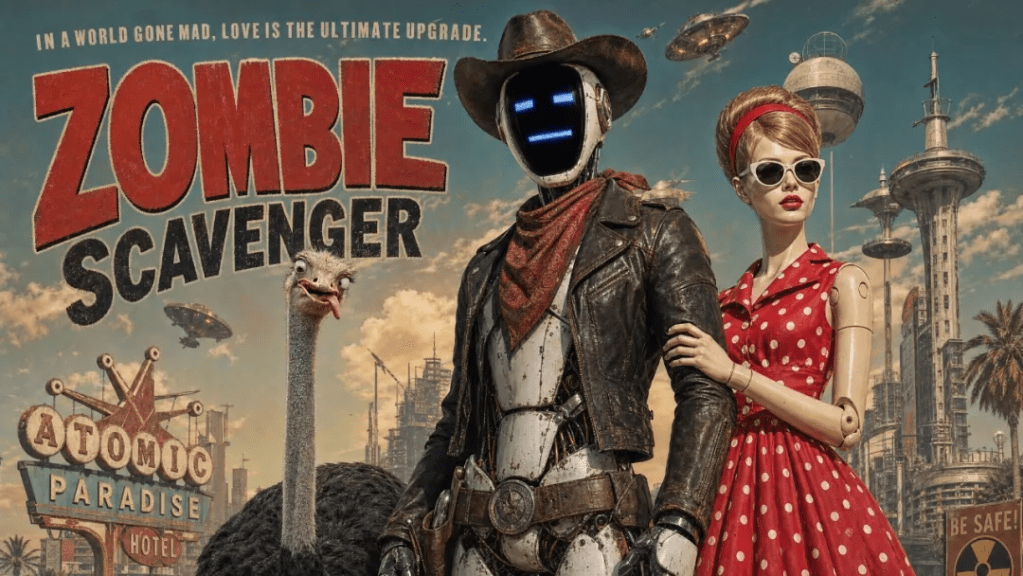
The story stood out because MX-Shell is not a traditional filmmaker or animation professional. Public reports describe him as a self-taught creator who learned music, photography and AI video production on his own, while working in a publicity-related role for a real estate company in Yunnan.
But the more important development is what comes next: Zombie Scavenger is becoming a playable AI video game.
According to MX-Shell’s social media posts, he is now a Yoroll-signed AI game creator. He has also released a game announcement and poster on Bilibili. The project, based on the world and visual style of Zombie Scavenger, is now in production and will be co-developed and published through Yoroll.ai, an AI-native playable video platform operated by LinearGame.
This shift matters because it suggests a new path for AI-native IP. A viral AI short no longer has to remain a one-time social media event. If it has a memorable character, a clear world and a strong visual identity, it can become the starting point for an interactive product.
Zombie Scavenger is well suited for that transition. Its robot cowboy, post-apocalyptic wasteland, zombie encounters and atomic-punk style already feel like the foundation of a game world. A short film can show one corner of that world. A game can let players enter it, make choices and explore different outcomes.
About Yoroll.ai
Unlike a pure AI video generation tool, Yoroll treats video as the expressive layer of a game. Creators can use text, images, short clips and character references to generate cinematic scenes, while the platform organizes those scenes through branching narratives, interactive nodes, game state and reusable gameplay components.
For creators, this reduces the distance between making a story and making a game. They do not necessarily need to code, model assets or build a traditional game pipeline. Their role becomes closer to directing a playable film.
For platforms and IP owners, interactivity also creates a stronger feedback loop. Video platforms know whether users watched or shared. Games can reveal what choices players make, where they drop off and which characters or storylines they care about.
The larger signal is clear: AI video is moving from passive content toward playable media. Zombie Scavenger may be an early example of how a self-taught AI creator can turn a viral short into a game IP. Future games may not always begin as novels, films or traditional prototypes. Some may begin as a short AI video, a character poster or a worldbuilding experiment that audiences discover first online.



 PR Desk
You must be logged in to post a comment.