Dubai, UAE, March 9, 2026
Hidden Road, a prime brokerage Ripple acquired in 2025 and rebranded as Ripple Prime, joined the DTCC’s NSCC directory on March 2. That addition means institutional post-trade volumes can now route directly onto the XRP Ledger through core US clearing infrastructure. The DTCC handles quadrillions in securities transactions annually.

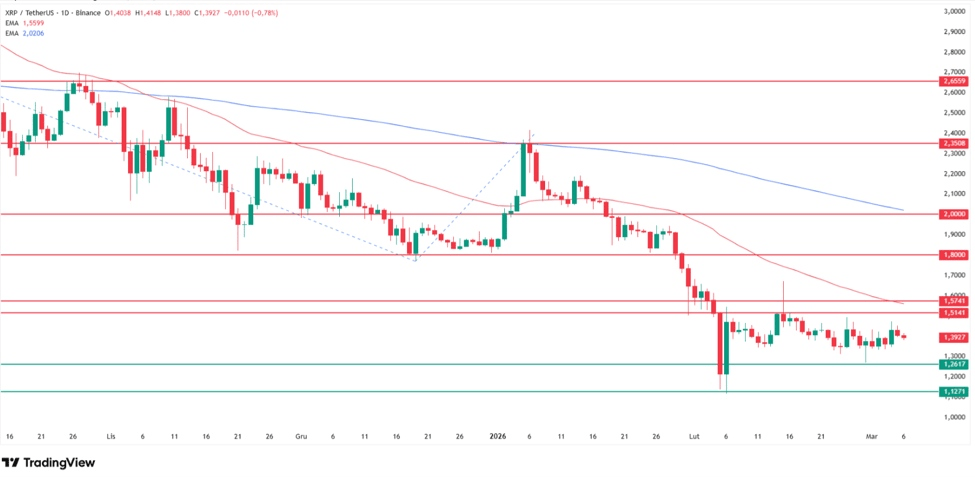
XRP currently trades near $1.39, down slightly on the day but still holding within a range that has stayed intact since February. The upper boundary sits between $1.51 and $1.57. The lower end lies near $1.12 to $1.26. Until XRP breaks one of those levels cleanly, the chart offers no clear direction. A move back above $2.00 would signal real strength. A drop toward the 2024 lows near $0.53 remains possible if support fails, though that is not the base case.
Mutuum Finance
While Ripple connects to traditional rails, Mutuum Finance is building out its own infrastructure on Ethereum. The protocol lets users lend assets or borrow against them without selling. Its design centers on smart contracts rather than centralized intermediaries, giving depositors and borrowers direct control. More than 19,090 holders have already invested in the project, with total funding surpassing $20,780,000 at a current token price of $0.04.
Peer-to-Contract Lending
Mutuum Finance operates two distinct lending models. One of these models, the Peer-to-Contract model, uses automated liquidity pools where lenders deposit assets into shared smart contracts. Those pools provide instant liquidity for borrowers who post overcollateralized positions. Lenders receive mtTokens minted 1:1 to their deposits, which automatically accrue yield as borrowers pay interest. Over time, those mtTokens become redeemable for more than the original deposit.
Overcollateralization and Loan-to-Value Ratios
Borrowing on Mutuum Finance requires posting collateral worth more than the loan. Loan-to-Value ratios run around 75% to 80% for stable tokens and 35% to 40% for volatile ones like ETH or WBTC. A user depositing $10,000 in ETH could borrow up to $7,500 in stablecoins. This structure lets borrowers access liquidity while keeping their original long-term positions intact.
Dynamic Interest Rates Based on Utilization
Interest rates in the Peer-to-Contract pools adjust automatically based on how much of a given pool is borrowed. When borrowing demand rises, rates increase for lenders, creating a market-driven pricing mechanism. Higher utilization means higher yields for suppliers. That design aligns borrower demand with lender returns.
Live Testnet Now Running
Version 1 of Mutuum Finance is already live on the Sepolia testnet, giving users a risk-free environment to explore the interface. The testnet supports Peer-to-Contract (P2C) lending and borrowing for core test assets, including USDT, ETH, LINK, and WBTC. Users can mint test versions of those tokens and interact with lending pools to see how deposits and withdrawals work.
The dashboard displays total liquidity, available funds, and individual portfolio metrics like net worth and Stability Factor scores. Borrowing presets labeled Safe, Balanced, and Aggressive automatically target specific collateralization levels, simplifying risk management. This testnet launch lets anyone verify functionality before mainnet deployment.
Protocol Security Measures
Protocol mart contracts have undergone a full audit by Halborn Security. CertiK’s Token Scan currently assigns MUTM a score of 90/100. An ongoing bug bounty program offers up to $50,000 for white-hat researchers who identify vulnerabilities within the token’s smart contract. The project’s codebase is intended to remain open source, allowing public verification.
Infrastructure Meets Utility
Ripple’s DTCC integration and Mutuum Finance’s testnet launch both point to growth. Mutuum Finance (MUTM) is implementing on-chain lending rails that let users earn yield and or borrow without selling.




 PR Desk
You must be logged in to post a comment.